Where we started
SalusCoop had been working on the idea for years and had a proof of concept, built by a Barcelona technology centre, that validated the model. The next step was turning it into a real product. The project came to us in March 2021 through iCommunity, its technology partner, which stored the health data using blockchain. We reworked the functional design and scoped an MVP for that summer.
What we build
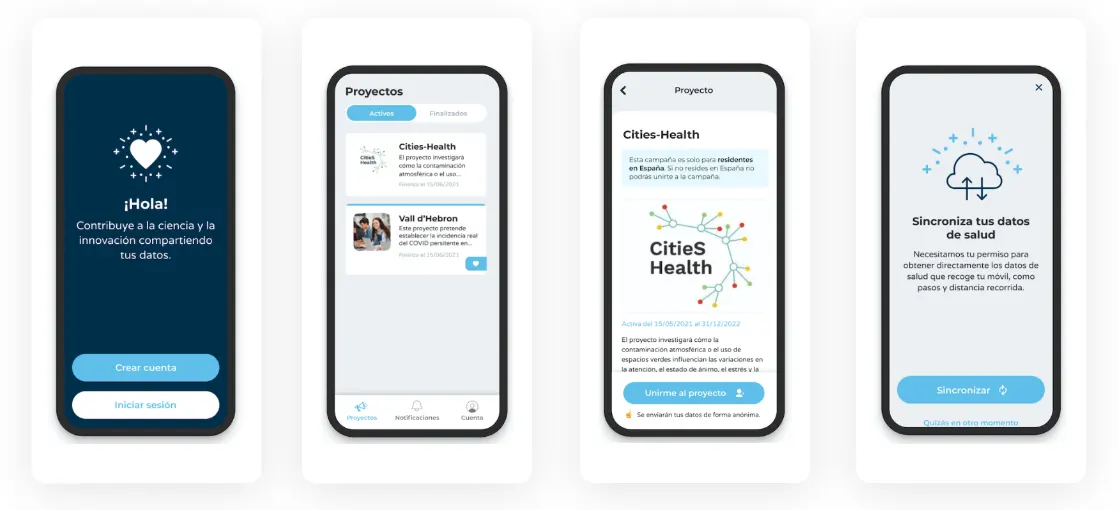
The mobile app, built in Flutter for iOS and Android, connects to Apple Health and Google Fit and collects the health readings members already have on their phone. When they sign up for a study or research project, that data is shared with it. Members stay in control throughout: they can see which projects they’re part of, leave any of them and delete their data. Many projects also include surveys that researchers send to participants to follow how they’re doing over the course of the study.
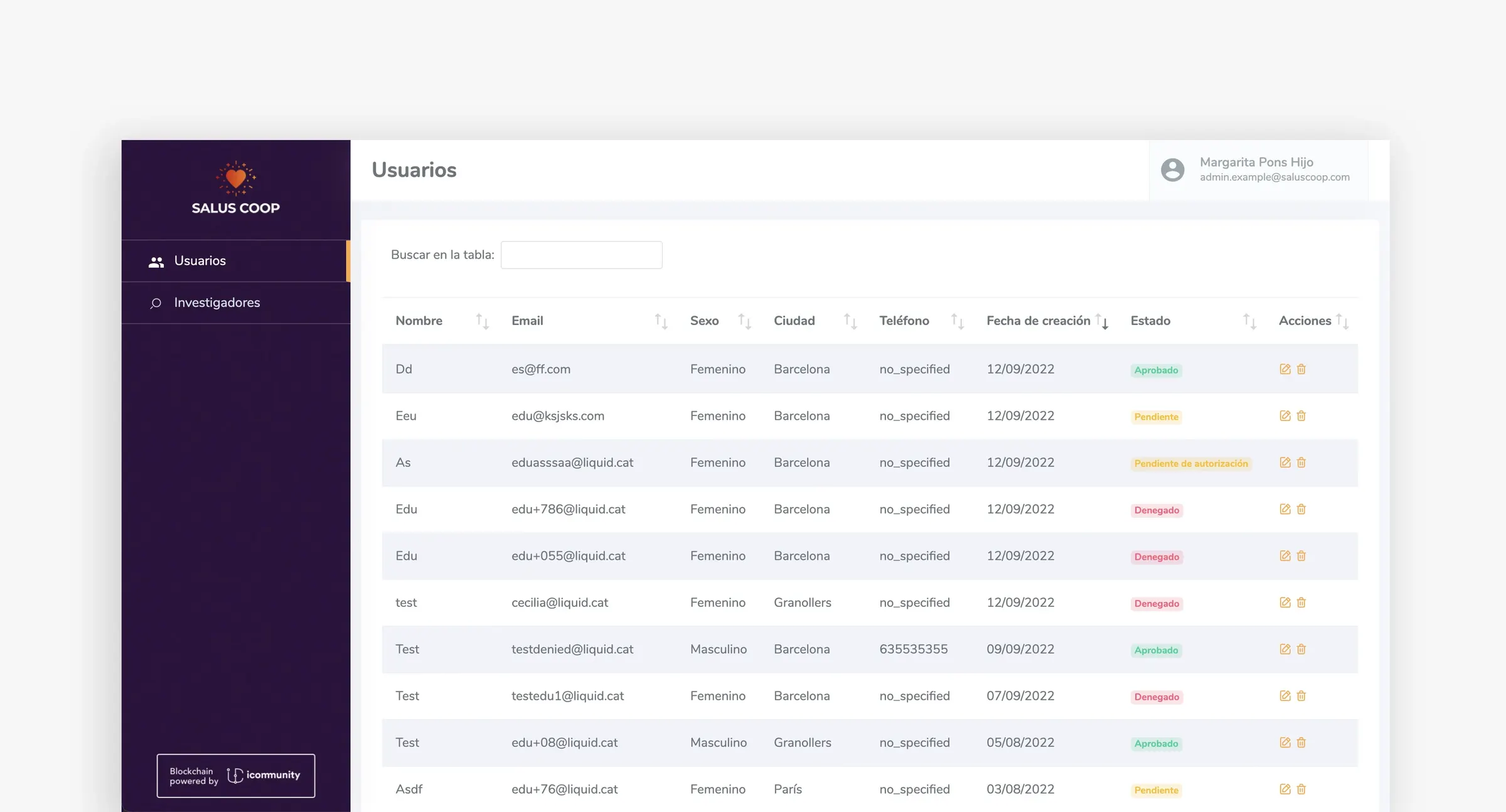
The back office, built in Laravel, is the researchers’ tool. Each researcher signs in by invitation and only sees the campaigns they manage, with participants’ data shown anonymously. From there they set up each project: the age range, location and any other criteria they’re looking for in participants. They also manage the surveys they send out.
How it has evolved
The MVP was released in 2021. In 2022 the app became available in Catalan, Spanish and English. In 2023 members were able to upload their medical history anonymously, adding to the health data they share. In 2024 an automated survey system arrived. Researchers can chain several surveys that change depending on each participant’s answers, and schedule which day each one is sent.
That same year iCommunity left the project. We migrated the platform to SalusCoop’s AWS infrastructure and moved the data storage logic iCommunity had been handling into our own backend. Since then, health data no longer goes through blockchain: it’s stored in the cooperative’s own systems, separate from participants’ identities. We also transferred the App Store and Google Play accounts, the domain and the email to SalusCoop.
SalusCoop today
Today more than 500 people are registered and SalusCoop has launched over 20 campaigns. One of the most recent is among its most important projects: a study on vertigo in people with a cochlear implant or who are candidates for one, run with the Biocomputing group at the Aragon Institute of Health Sciences (IACS).
With the platform on its own infrastructure and the accounts in its name, the cooperative runs its campaigns independently. Each study can combine phone health readings, medical history and follow-up surveys from its participants.