The problem
The client's Liferay platform isn't limited to its Spanish branch, it's part of the group's global deployment, which means any integration installed on it has to pass security validations at a global level: a full OWASP audit, a penetration test by an approved external company, and fixes for any vulnerabilities before anything could go live.
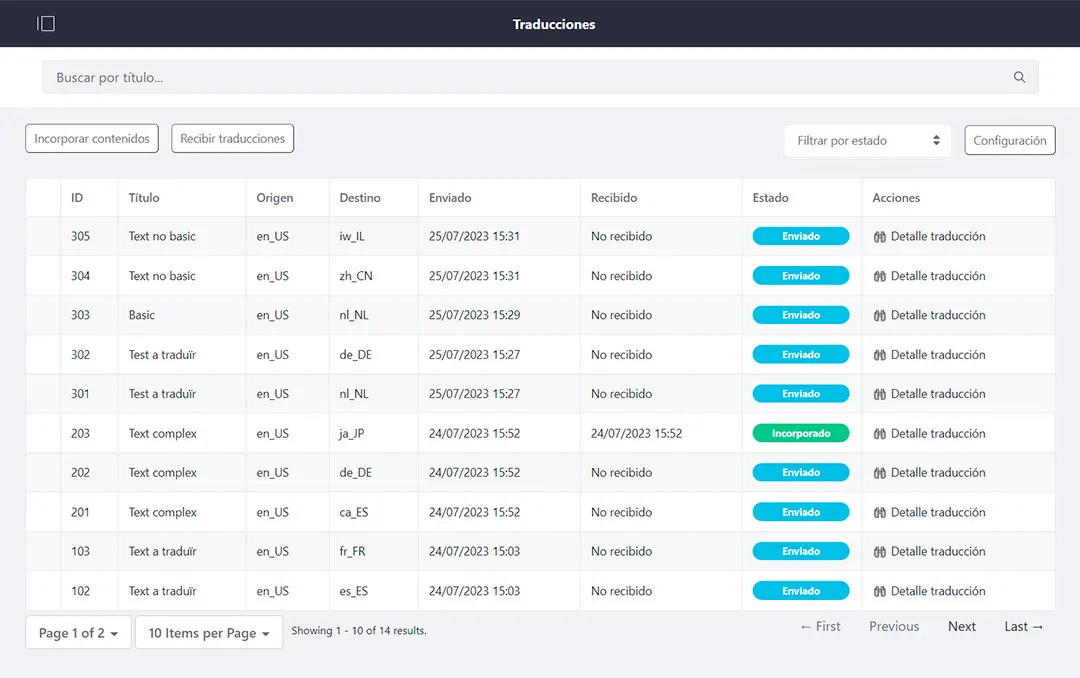
On top of that came the complexity of the workflow itself: Addenda needed to separate roles (who can accept and send back a translation and who can only translate), keep a clear status for each request, and have all of it sync automatically with the actual content in Liferay.
Our client wanted to manage translations straight from their Liferay, without having to copy texts out to send them or put the translations back in by hand once finished. We didn't have the technical capacity to offer them that, so we turned to Liquid, who built the plugin and the application that now let us run the whole workflow. The solution also passed the external security audit the insurer required. Without Liquid we couldn't have provided that service. Almost three years later, we still use the solution every day and still work with them: when something comes up, they answer quickly and sort it out.
 Marina MateoPartner at Addenda
Solution
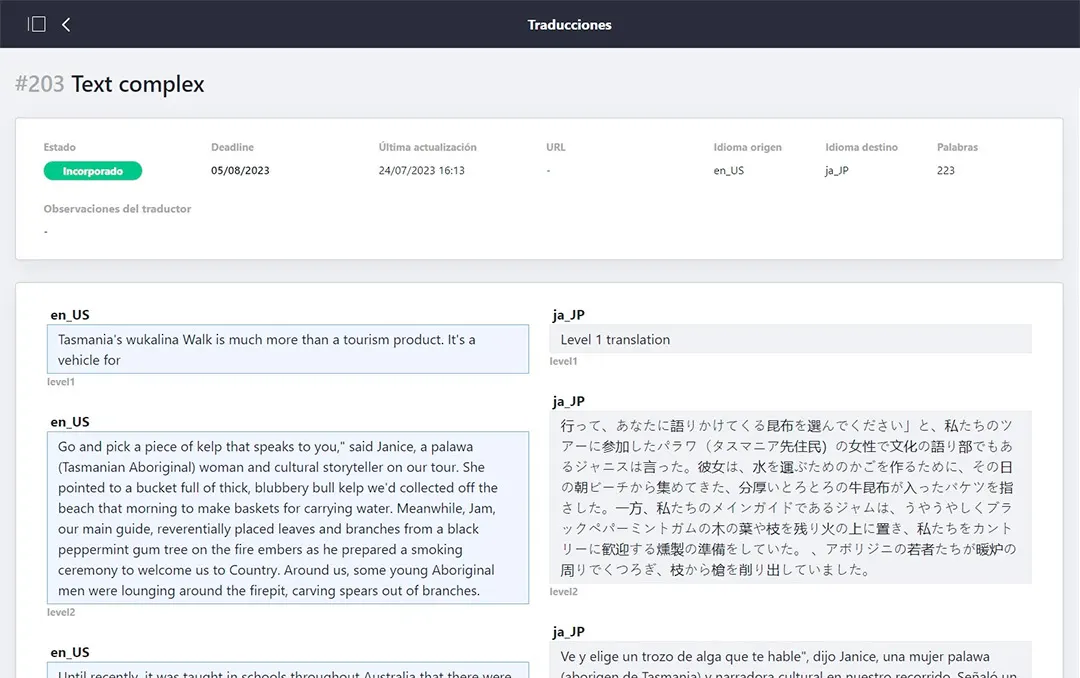
We built an integration between Liferay and a dedicated web application where Addenda's team manages day-to-day work. From Liferay, the client's content team requests a translation directly from their own CMS, notes and context included. That request lands in Addenda's app, where it's assigned to translators, tracked through its status, and once validated, sent back to Liferay automatically as a draft ready to publish.
The security work ran in parallel: we went through a full audit with a specialized company (technical report plus an executive summary), fixed what needed fixing, and adapted the architecture to the group's requirements.
The rollout wasn't linear: there were several rounds with Liferay Marketplace to get the integration published correctly, a faulty build that had to be fixed with Liferay's support team, and a last-minute requirement that got resolved without stalling the project.
Results
The plugin has been live since late 2023, and Addenda still runs that client's translations through it. After launch we also took care of its maintenance, and over the first few months we fixed what real use turned up: deleted users breaking the sync, translations that never arrived and a search that needed tuning.
Since then we've kept improving the application so Addenda's team spends less effort managing the work, and we've made it multi-tenant: Addenda can now offer the plugin to any company running Liferay. The next step is adding AI-assisted translation as one more option.